About
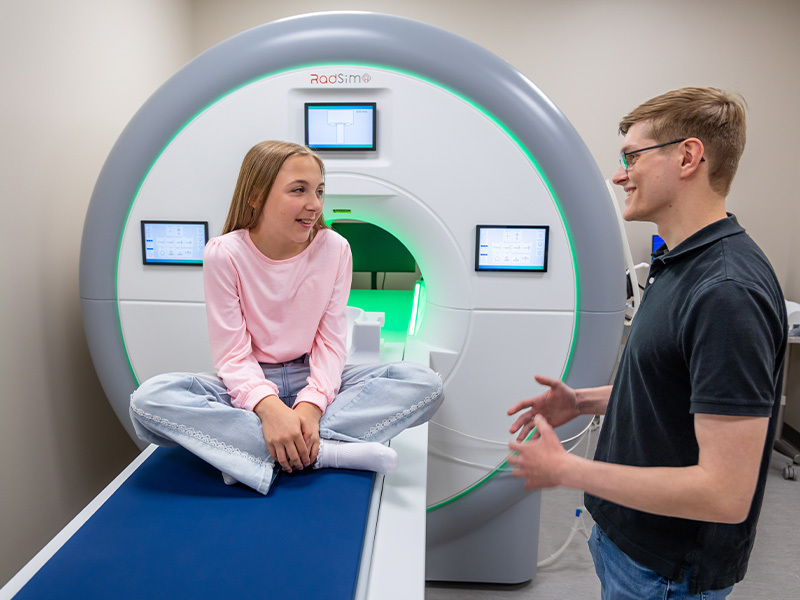
The Human Neuroimaging Center advances an integrated vision of modern neuroscience grounded in a central insight: Understanding the brain requires scientific rigor, humanistic insight, and ethical responsibility.
The center, therefore, unifies network neuroscience, the neurohumanities, and neuroethics within a shared interdisciplinary framework.
Grounded in Network Neuroscience
At the heart of the center is the emerging field of network neuroscience. Rather than isolating individual brain regions, network approaches investigate patterns of interaction across distributed systems. From these coordinated dynamics emerge the remarkable mental capacities that underlie human intelligence. Viewing the brain this way shifts how we understand the nature of the human mind. Differences in learning, responses to stress or illness, and recovery of function are not treated as fixed properties of individuals, but as expressions of how neural systems are organized, integrated, and able to adapt.
Enriched by the Neurohumanities
As neuroscience progresses, its findings contribute to broader efforts to understand what it means to be human, shaping how we envision personhood, agency, and the nature of human experience. From this recognition, the center’s commitment to the neurohumanities follows. Neuroscientists collaborate with scholars in the social sciences and humanities to examine how neuroscience can be enriched by attention to history and culture, as well as enduring questions of human experience and meaning.
Guided by Neuroethics
Because neuroscience shapes how individuals are understood and treated, it also carries ethical significance. The center, therefore, approaches neuroethics not as an external critique of science but as integral to its practice. Neuroscientific theories shape how prediction, intervention, and responsibility are defined across clinical, educational, and social contexts, and these implications are considered essential to neuroscience pursued with responsibility and care.